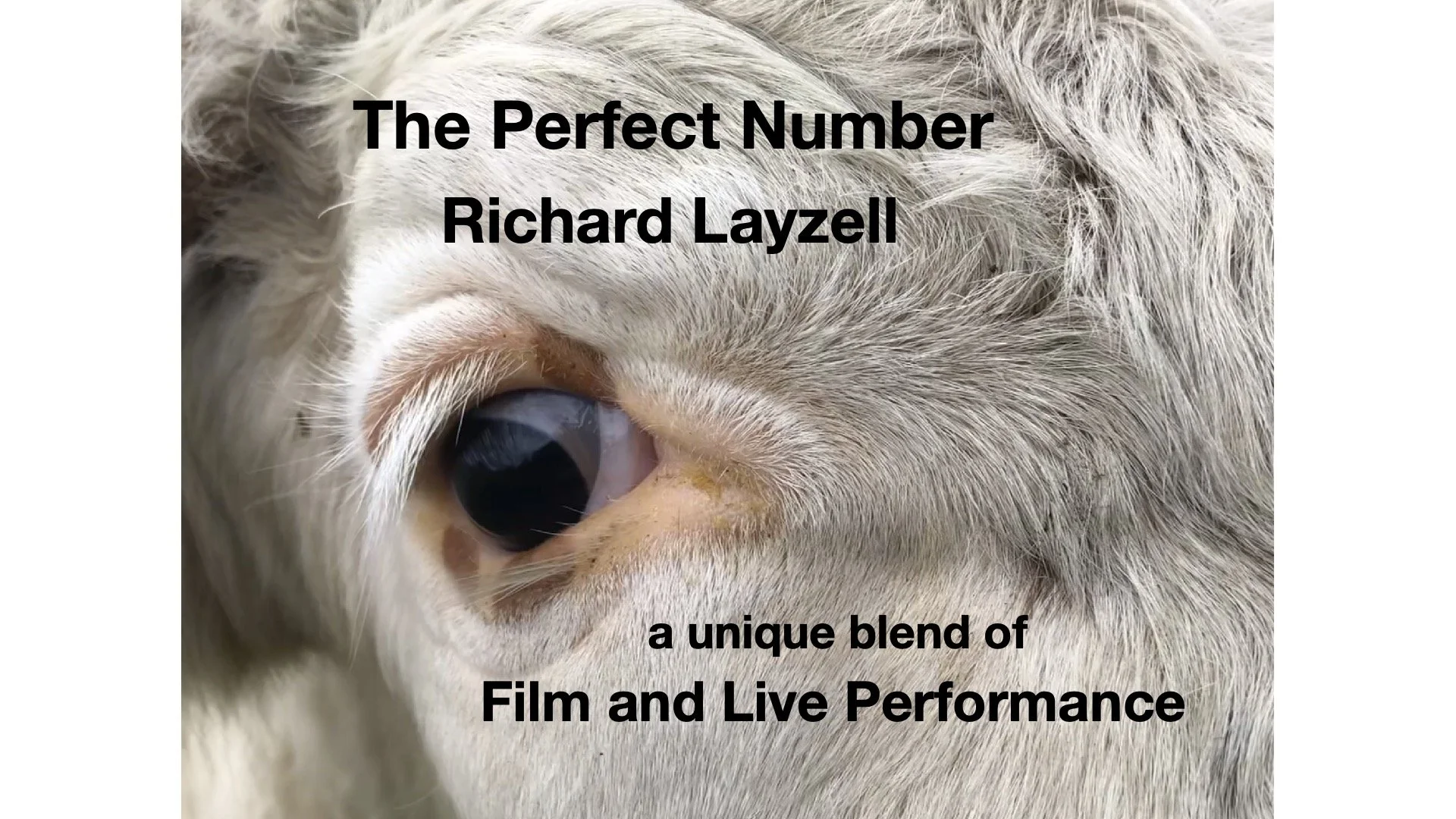
The Perfect Number
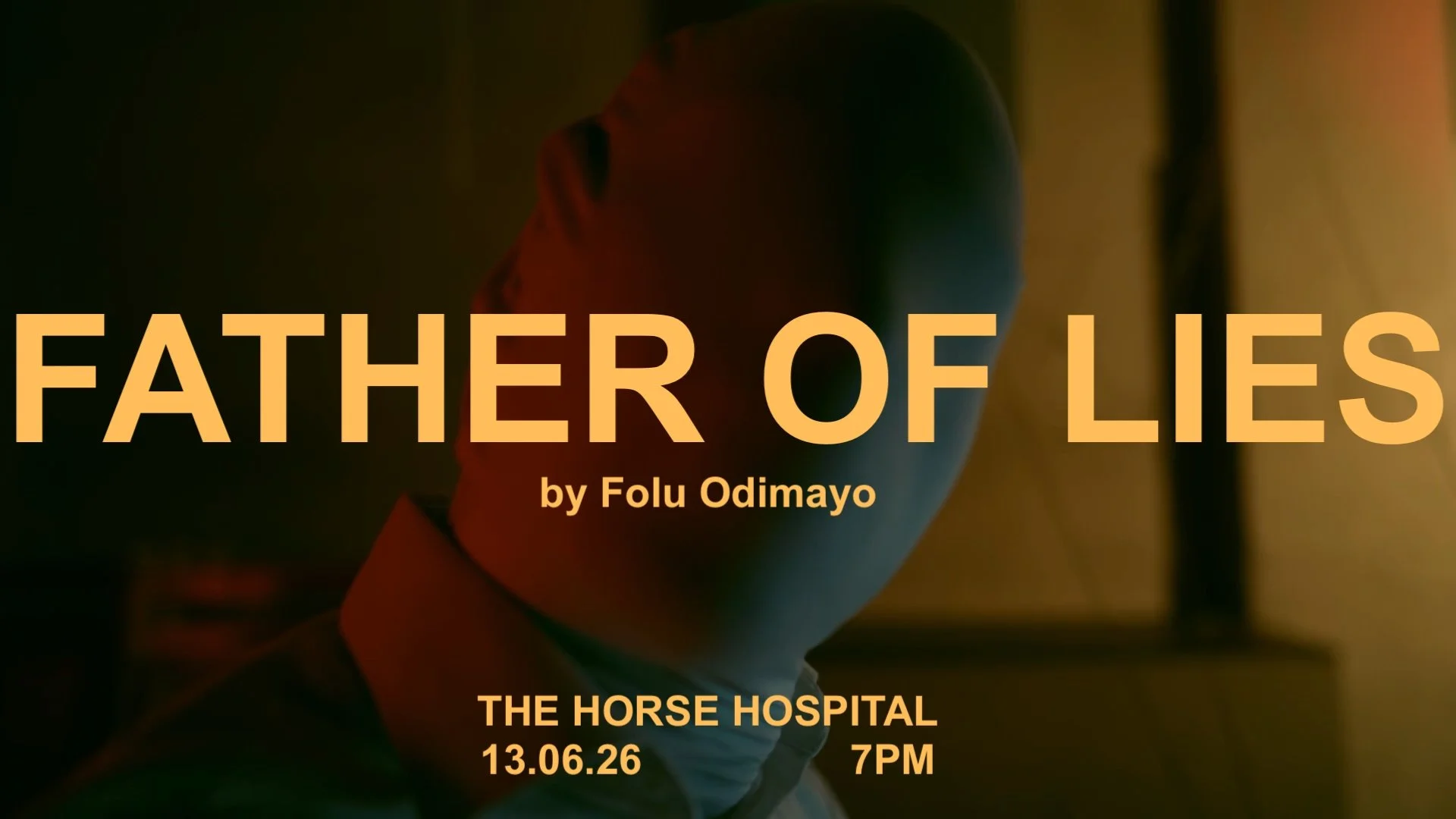
A unique interaction of film and live performance, where the narrator/performer exists in many different shapes and places.
Often dismissed as gratuitous or artistically empty, gore remains one of horror cinema’s most contested pleasures. This lecture reframes gore as an aesthetic practice rooted in tactility, craft, and collaboration. Tracing the devaluation of gore films and their fandoms, it situates graphic violence within broader artistic traditions and examines practical effects as a form of resistance to digital smoothness.
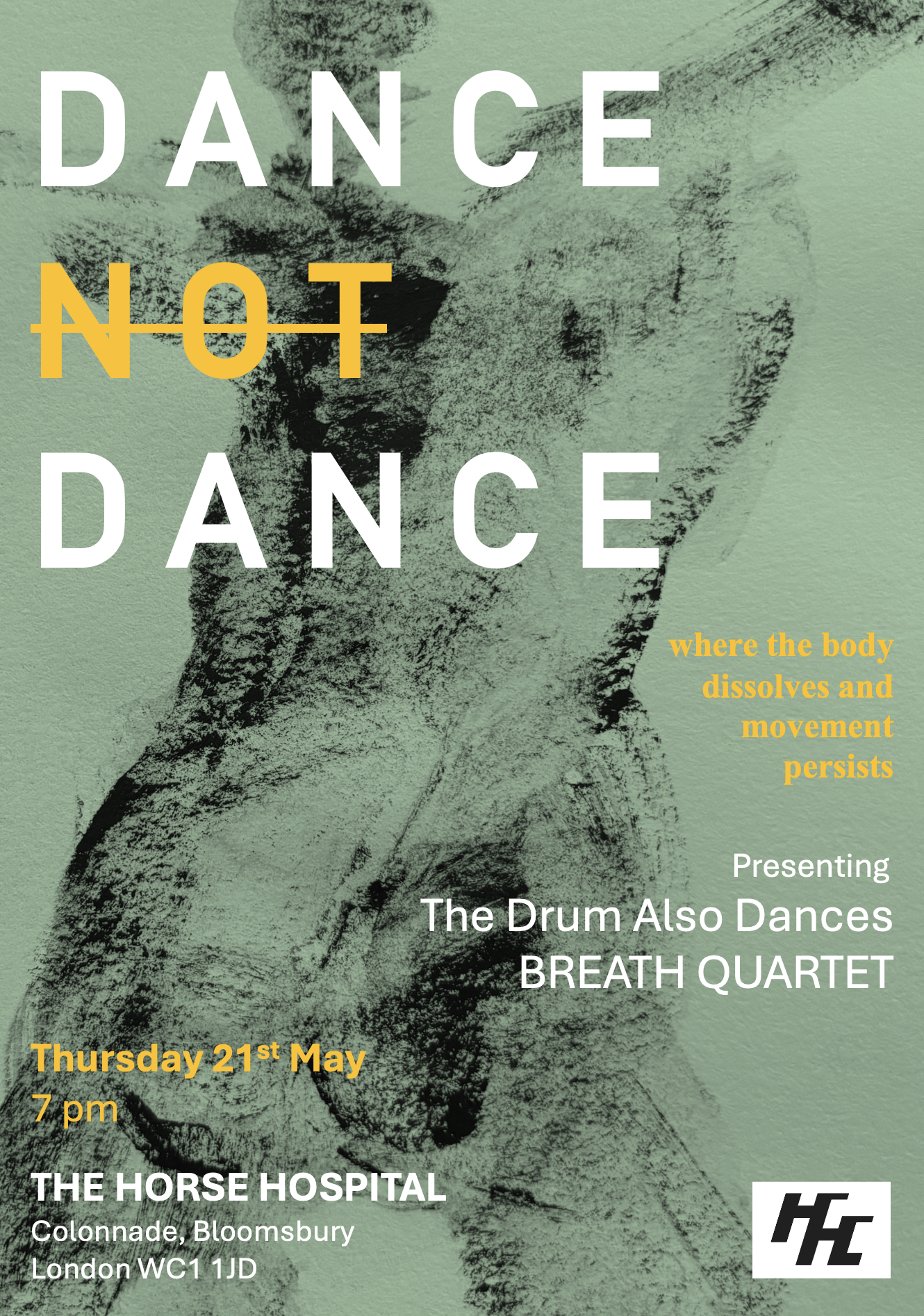
An evening that moves between embodied rhythm, disembodied choreography, and live improvisation, featuring The Drum Also Dances and Breath Quartet
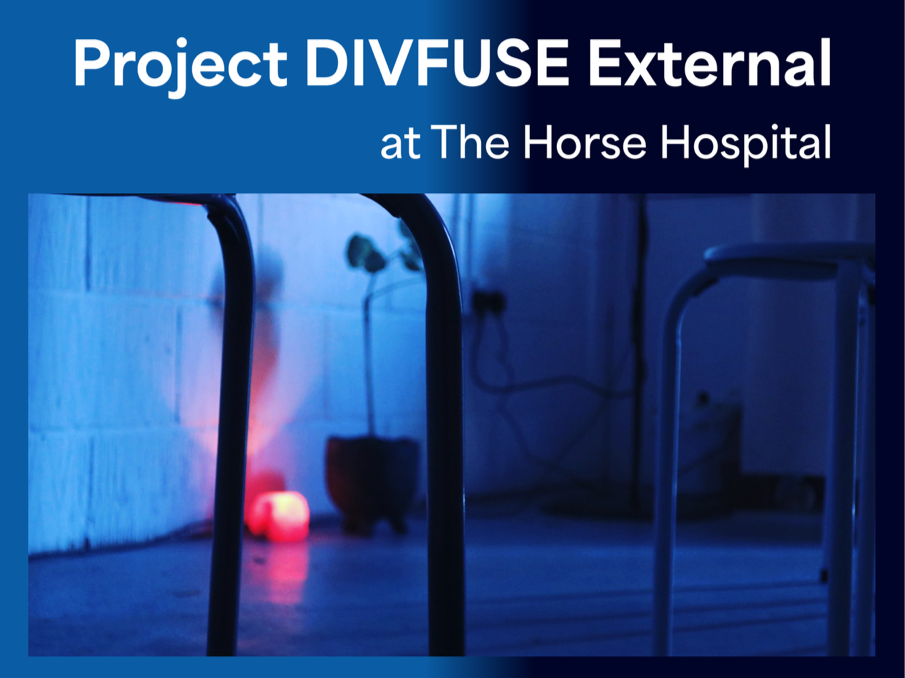
Project DIVFUSE is presenting its second off-site event and a first one at The Horse Hospital. Bringing together several artists who have exhibited or performed at DIVFUSE micro project space in Lower Clapton E5 since its doors first opened to the public in July 2021, this evening will showcase sound inspired films.
Mark Pilkington, author of the UFO meta-conspiracy classic Mirage Men, presents a curated selection of his favourite filmic artefacts from the flying saucer era and beyond. Against the backdrop of the longest sustained wave of UFO coverage in the United States since the 1940s—culminating in a series of inconclusive congressional hearings—this lecture examines how moving images shape belief, doubt, and wonder.
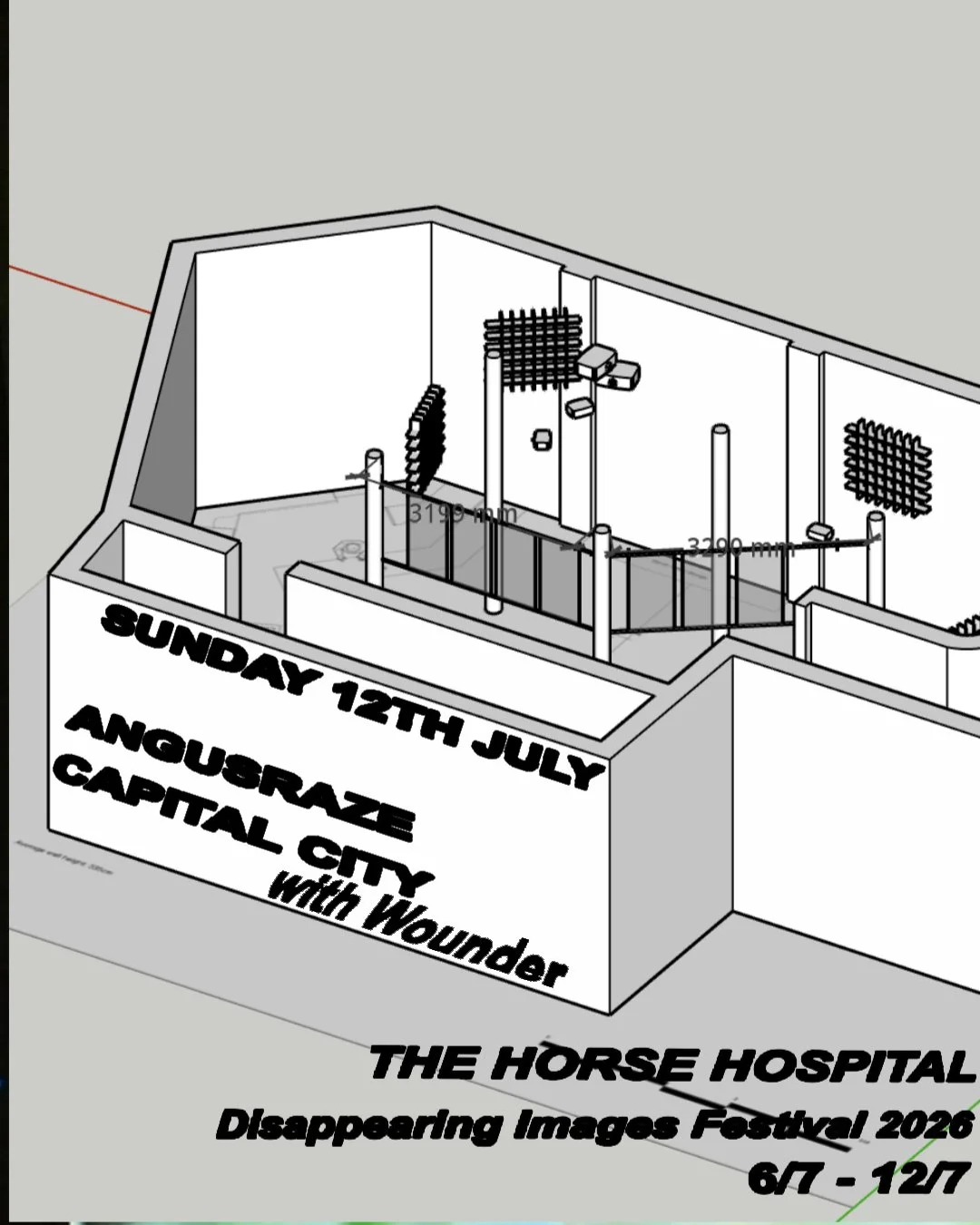
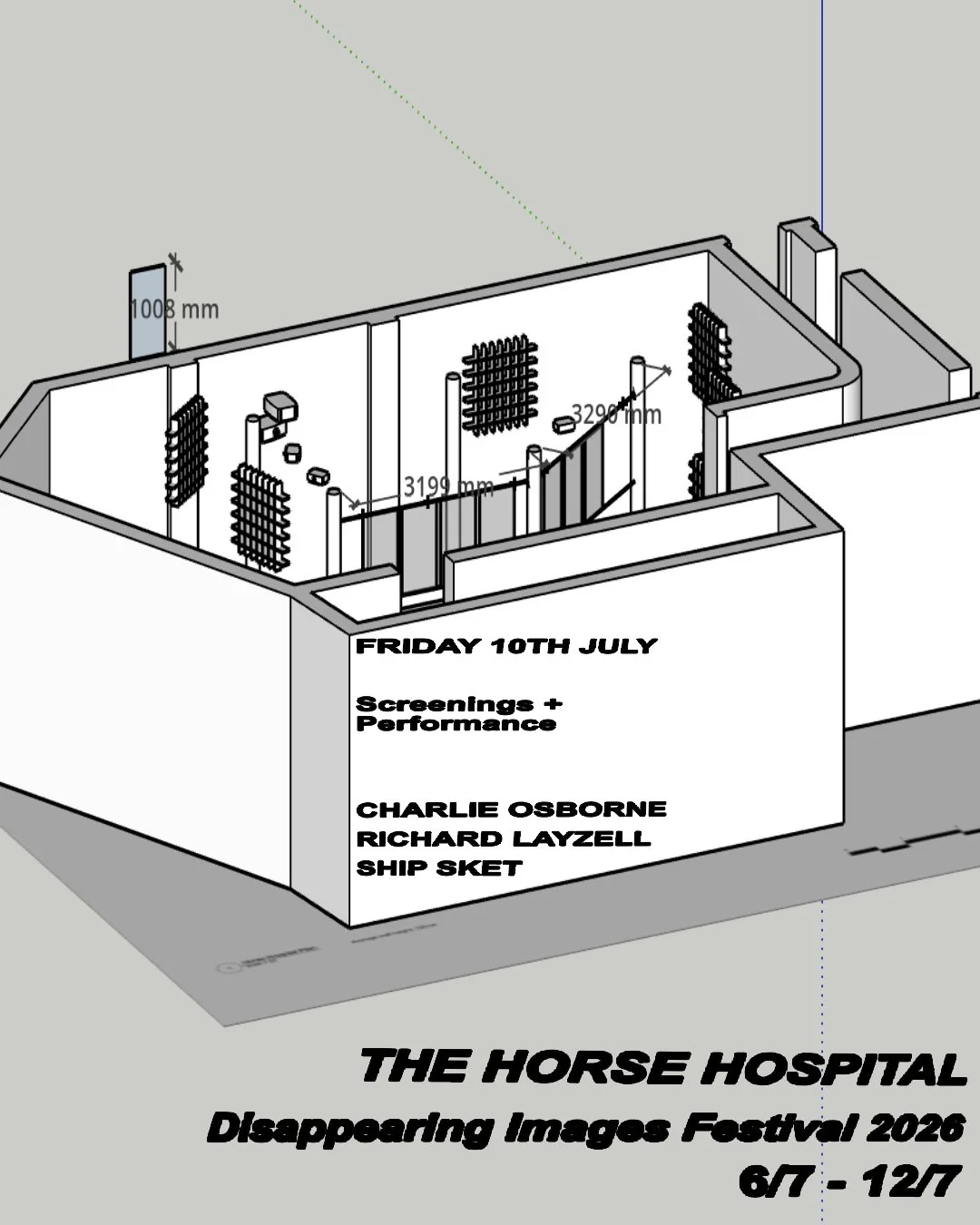
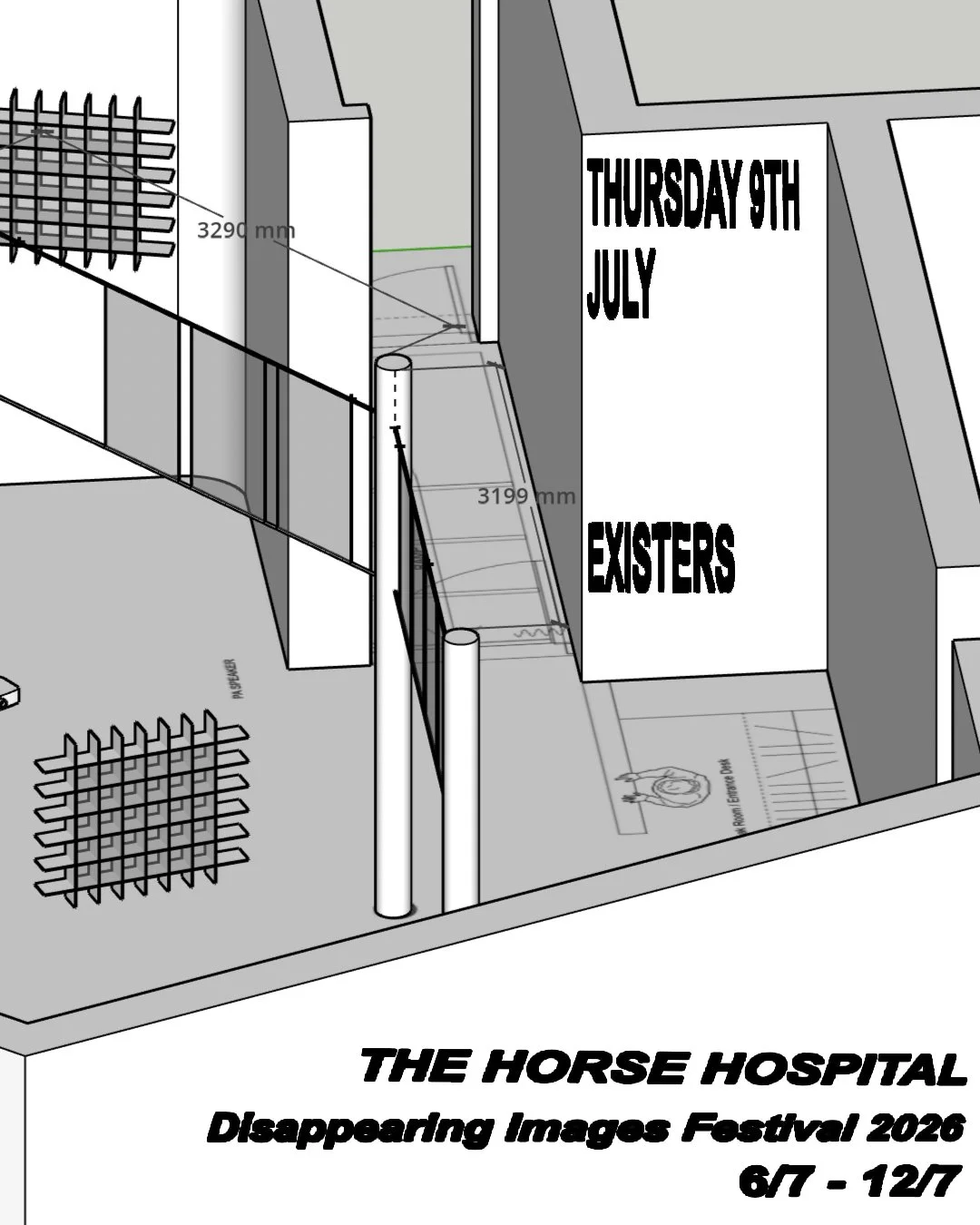
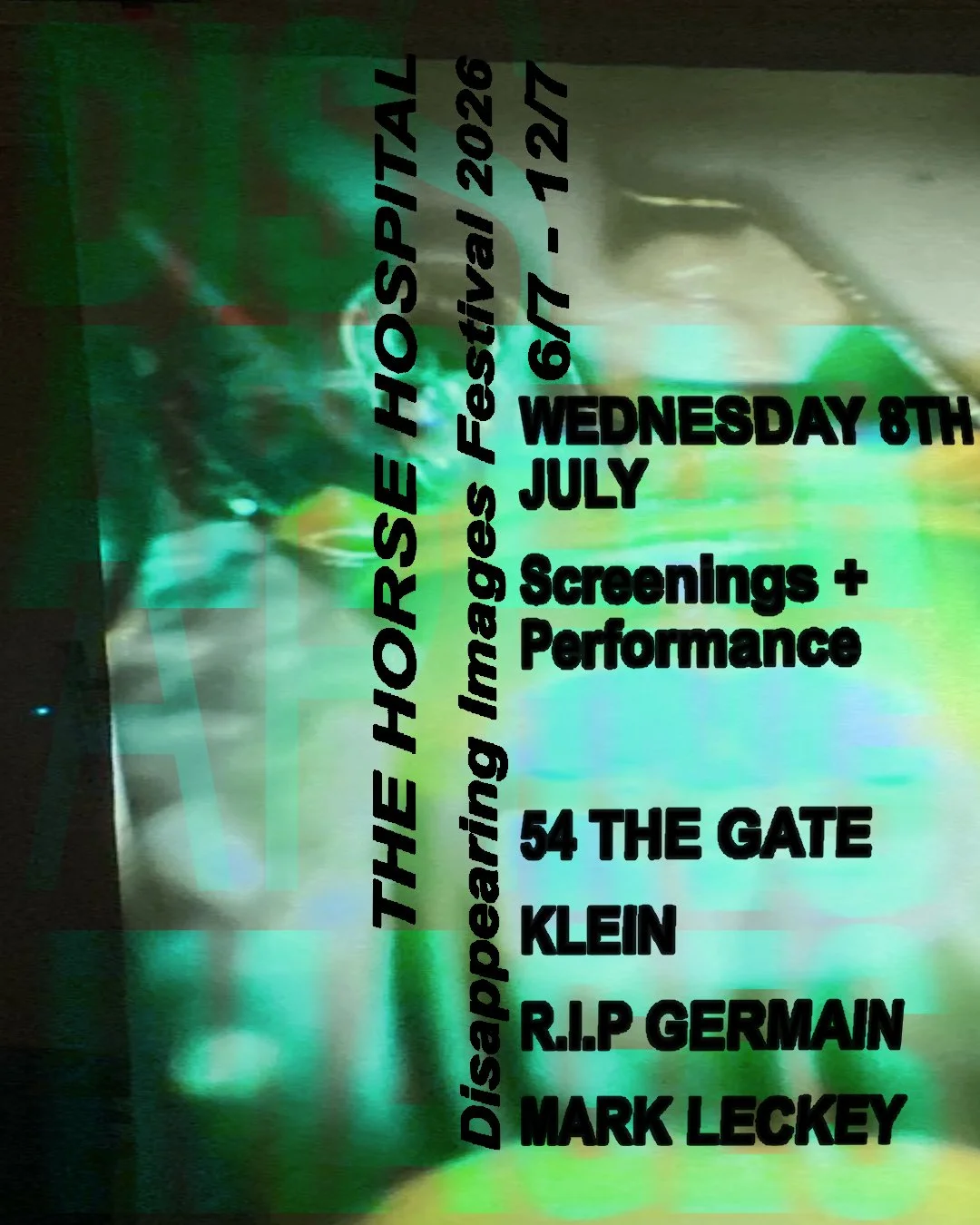
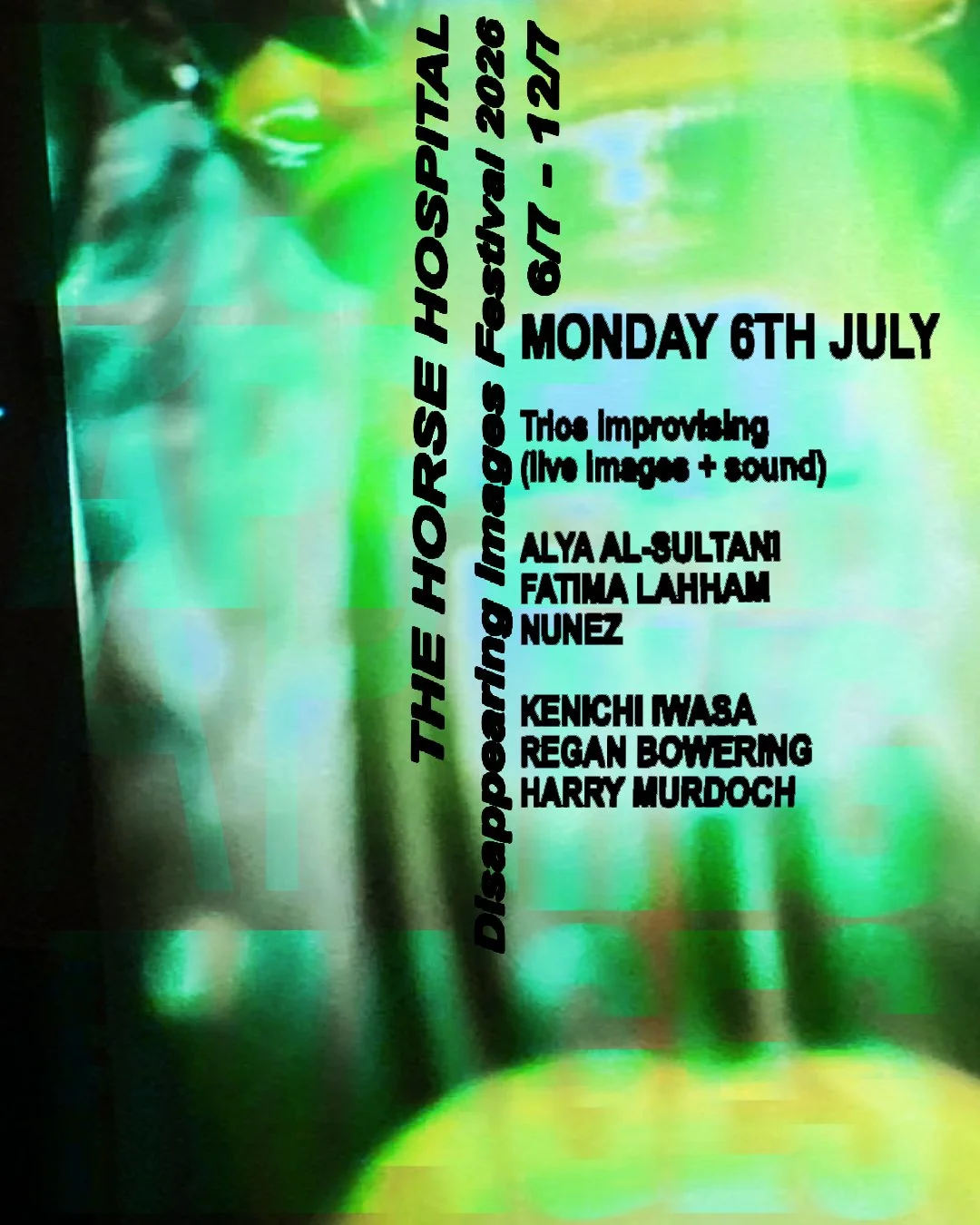
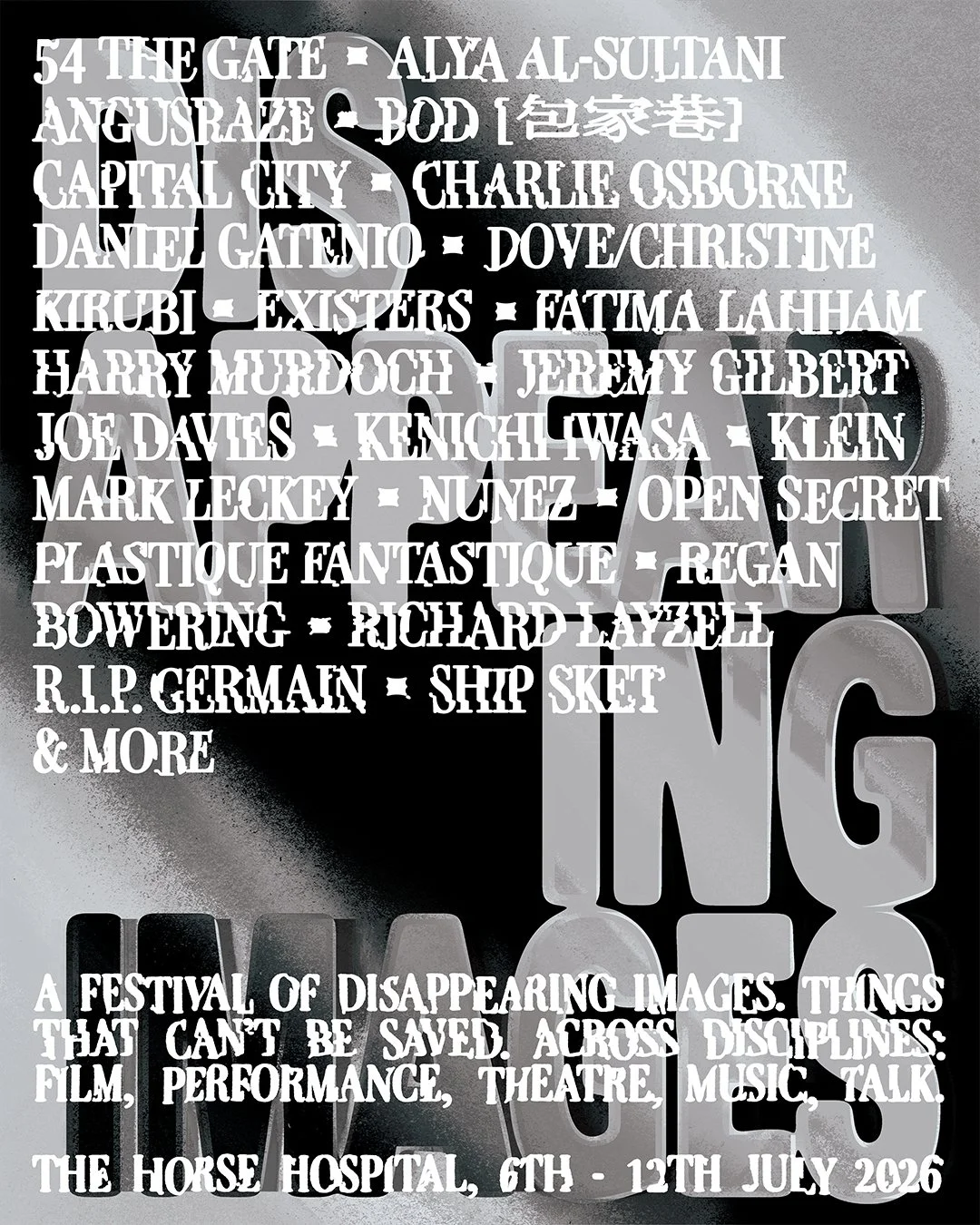
A festival of disappearing images. Things that can’t be saved. Across disciplines: film, performance, theatre, music, talk.
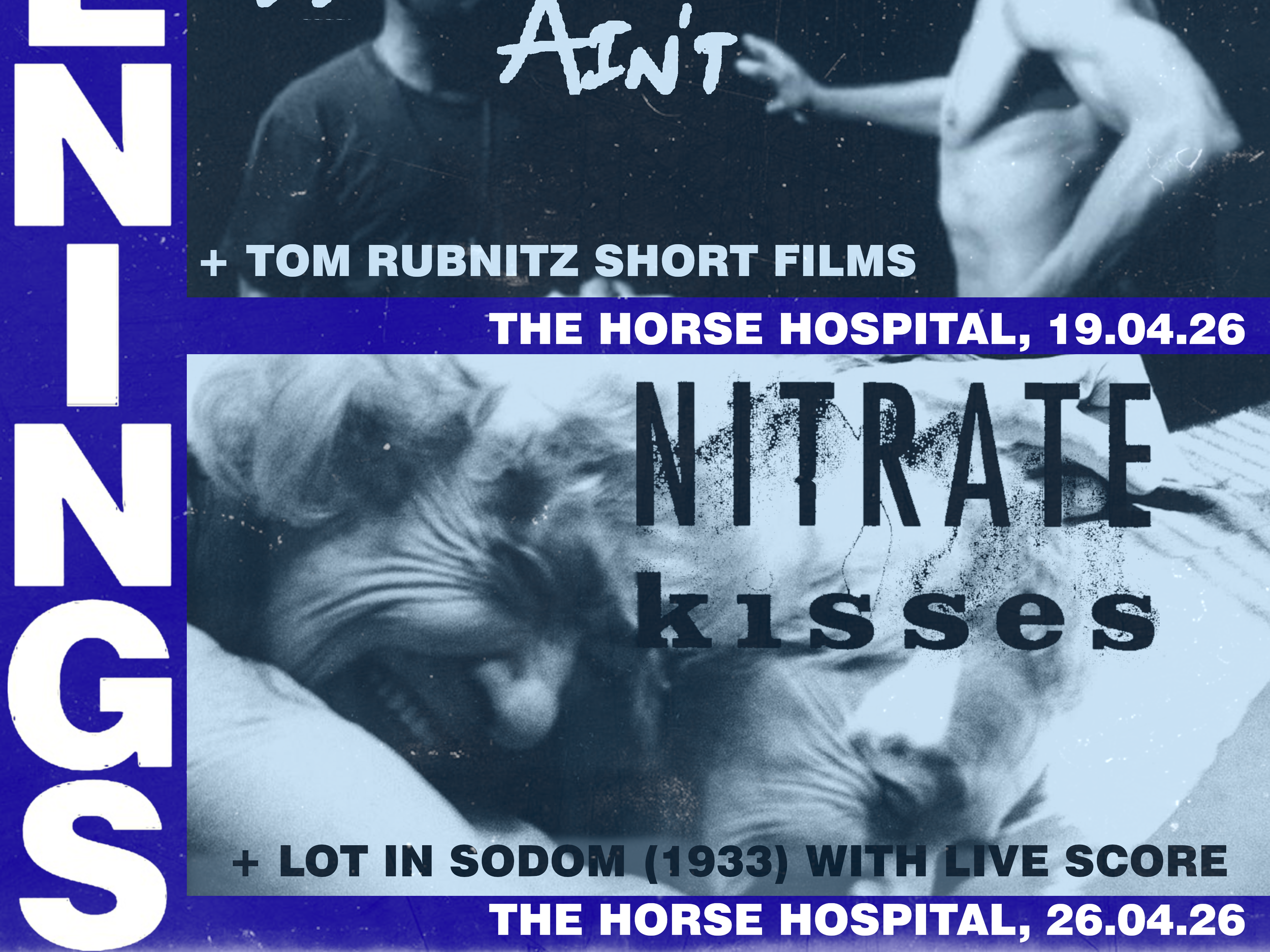
A series of afternoon underground queer cinema at The Horse Hospital. Nitrate Kisses (1992) is the first feature documentary by Barbara Hammer, a pioneer of lesbian cinema. It weaves striking images of four gay and lesbian couples with footage of an unearthed forbidden and invisible history. Archival footage from the first gay film in the U.S., Lot In Sodom (1933) is interwoven in this haunting documentary. This will be screened proceeded the film, with a live score.
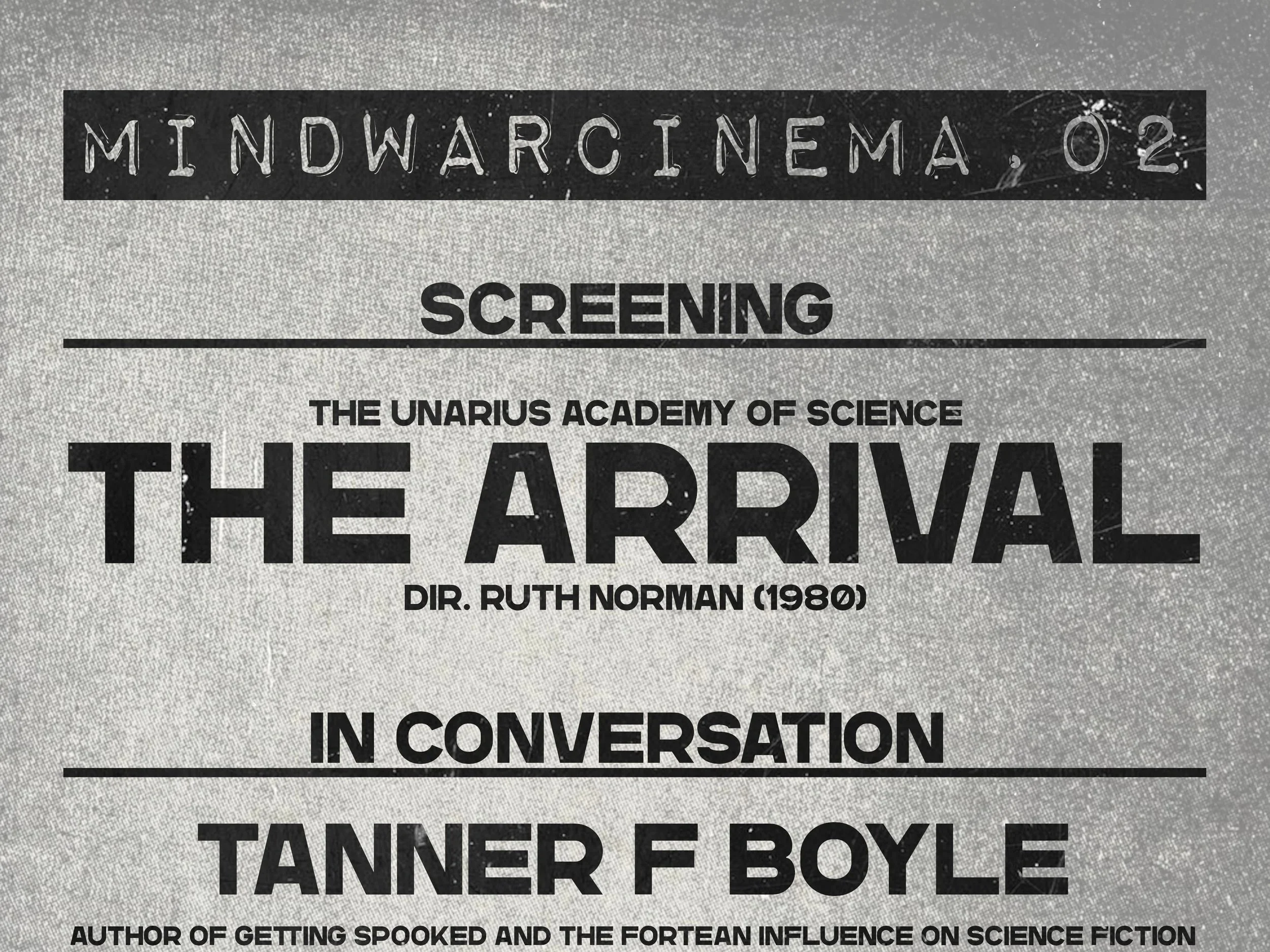
Mindwarcinema present a screening of the cult classic The Arrival (1980), directed by Ruth Norman of The Unarius Academy of Science. The screening will be accompanied by an in conversation between Tanner F Boyle, author of Getting Spooked and The Fortean Influence on Science Fiction) and Mark Pilkington (author of Mirage Men and publisher of Stranger Attractor Press).
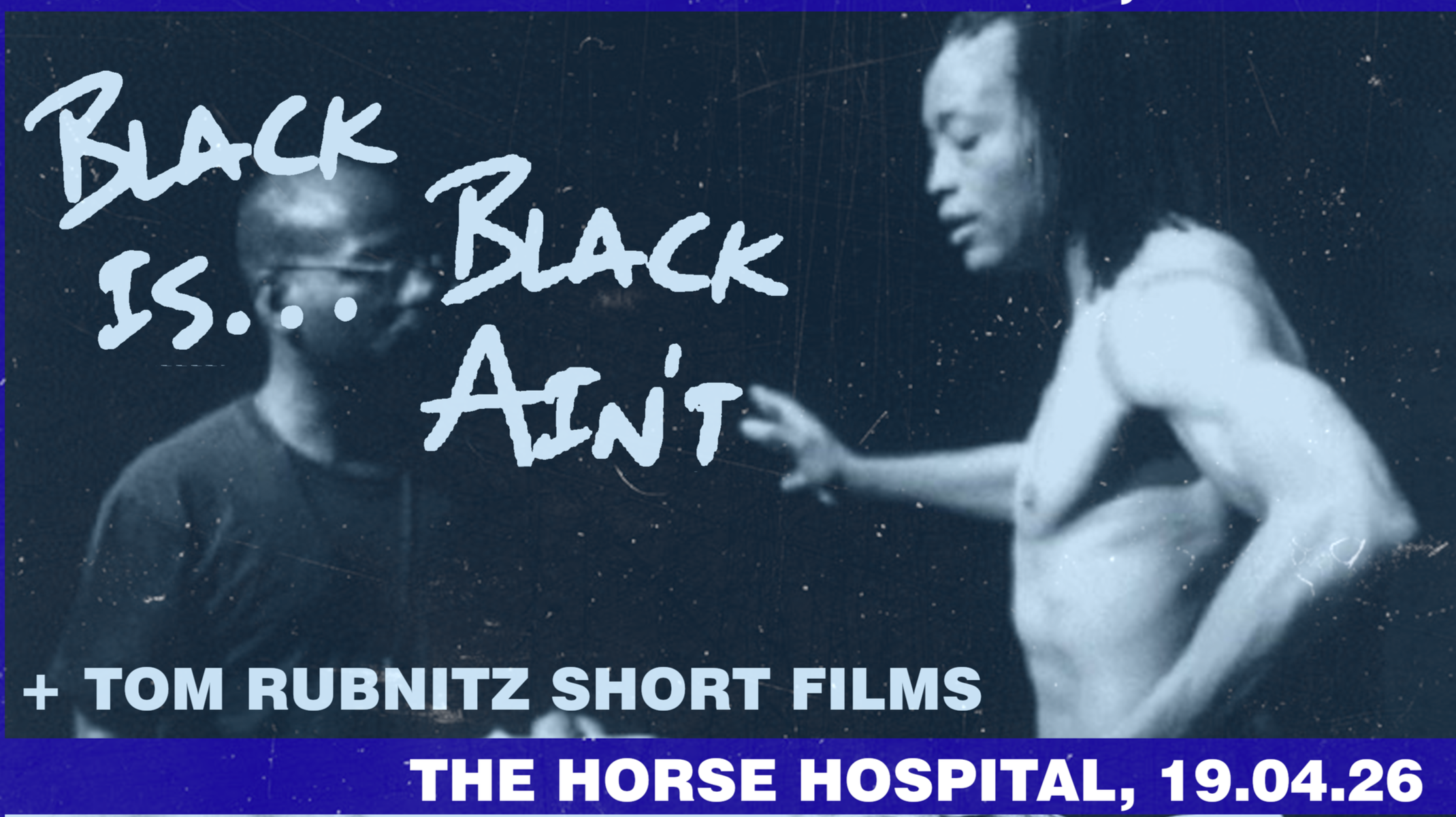
A series of afternoon underground queer cinema at The Horse Hospital. Black is… Black Ain’t (1995) is the final film of director Marlon Riggs. His camera traverses the country, bringing us face to face with Black folks young and old, rich and poor, rural and urban, gay and straight, grappling with the paradox of numerous, often contested definitions of Blackness. Hooked up to an IV in his hospital bed, Riggs takes strength for his struggle against AIDS from the continual resilience of the African Americans in the face of overwhelming oppression. The screening is proceeded by a selection of shorts by video artist Tom Rubnitz.
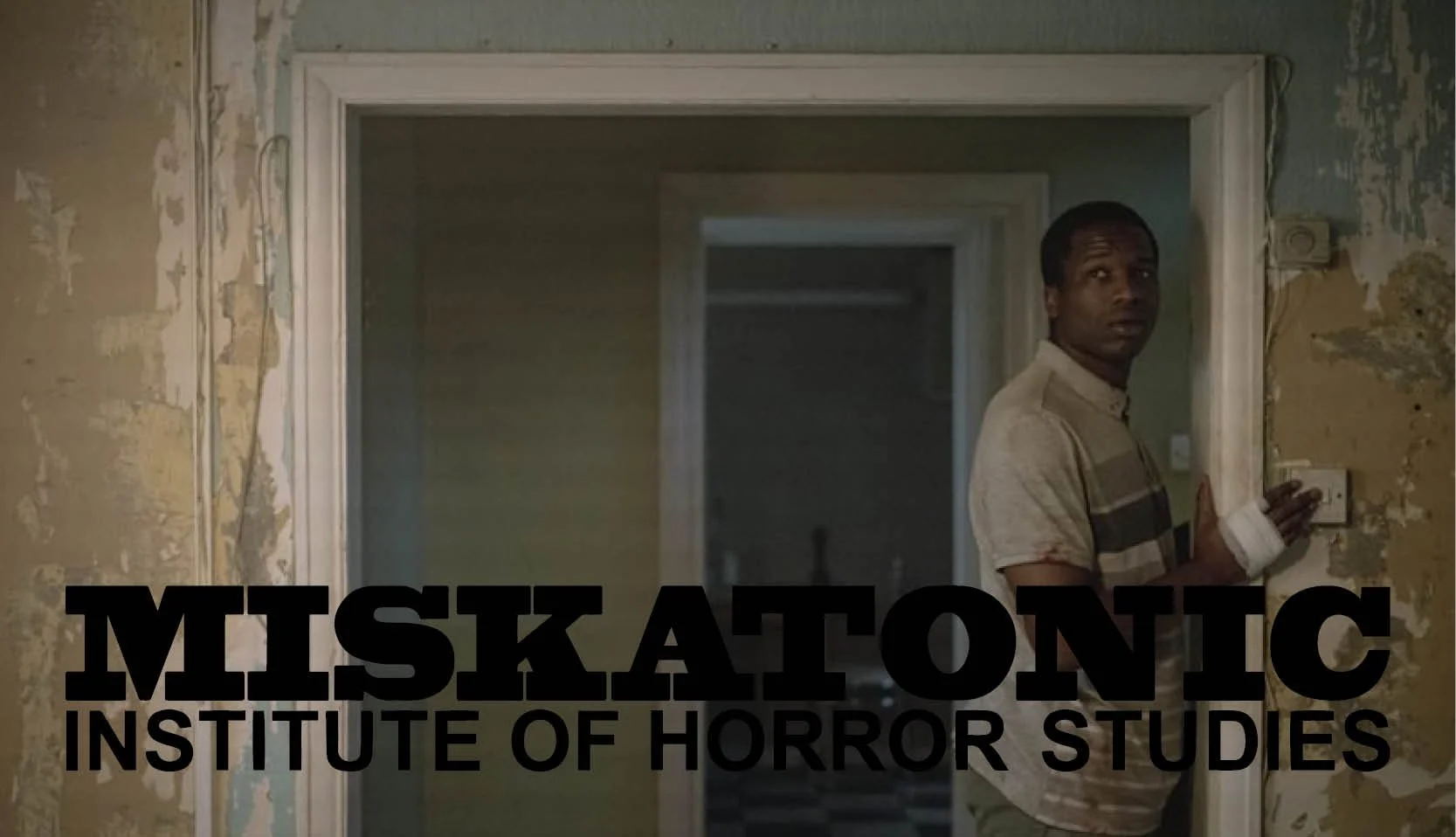
His House (2020) is a ghost story about displacement, precarity, and the inescapable afterlives of empire. This lecture situates the film within a global “horror cinema of precarity” that uses the genre to address marginalised experiences. Drawing on postcolonial Gothic and hauntological theory, it explores how Britain’s imperial and capitalist legacies haunt the film atmospherically rather than corporeally.
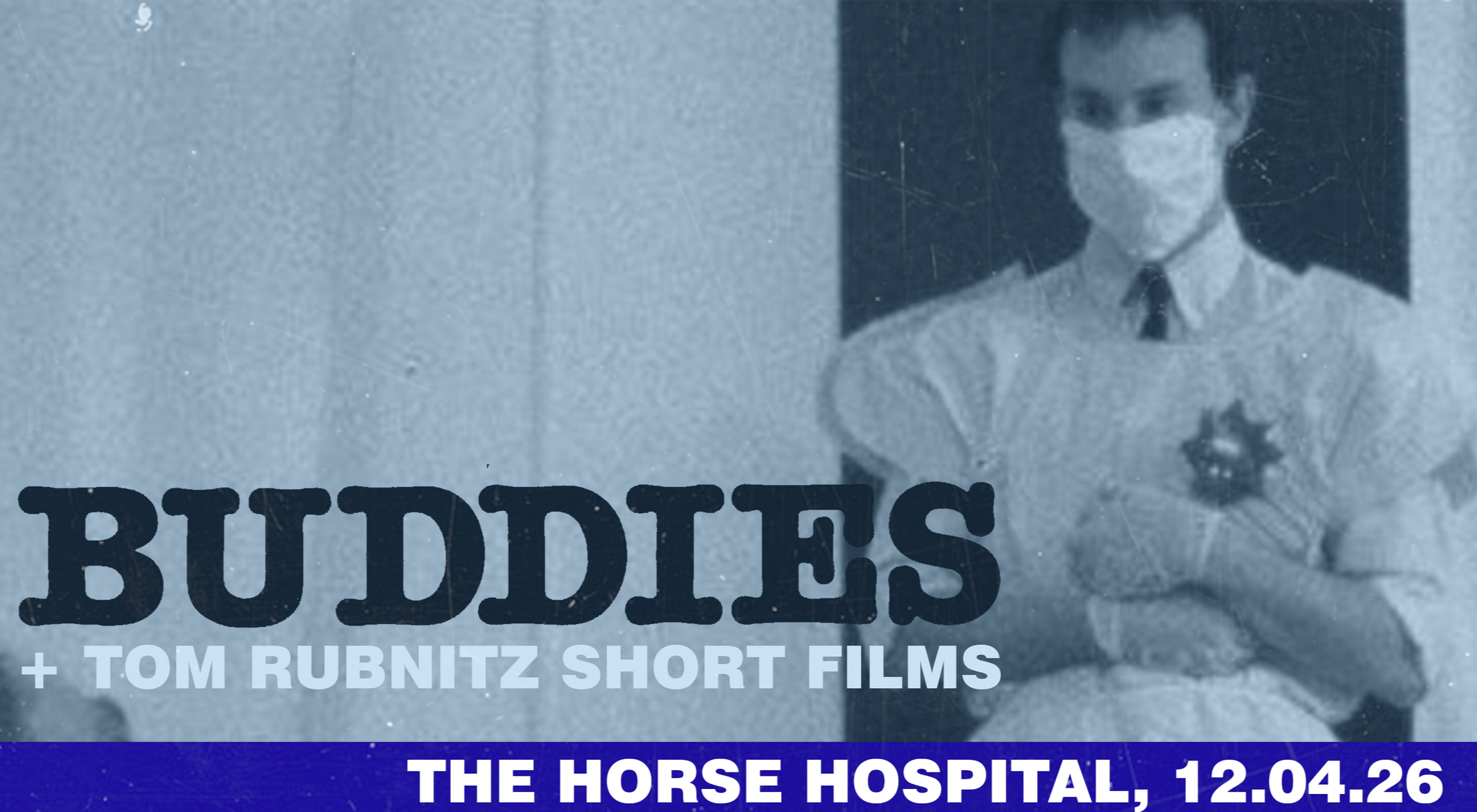
A series of afternoon underground queer cinema at The Horse Hospital. Buddies (1985), directed by Arthur Bressan Jr., was the first narrative film made about AIDS. Alongside Buddies, Bressan is known for the documentary Gay USA and a number of pornographic films. The screening will be proceeded by a selection of shorts directed by the video artist and AIDS activist Tom Rubnitz.
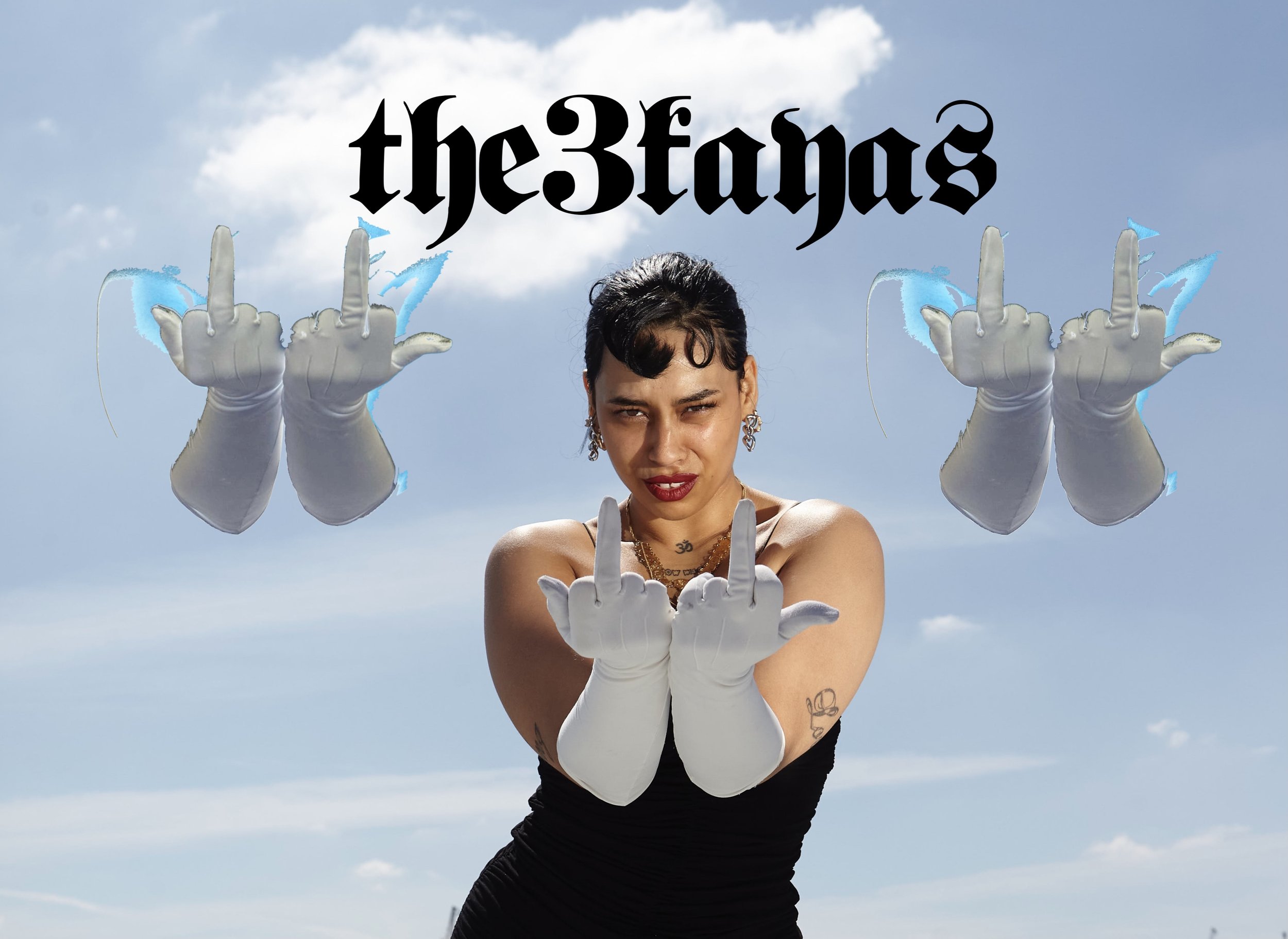
A multidisciplinary bill, mixing auto-fictional film, live vocals from the heart and independent performance makers Luisa D Rozo and THE3KAYAS, alongside fine tune slector Nymity
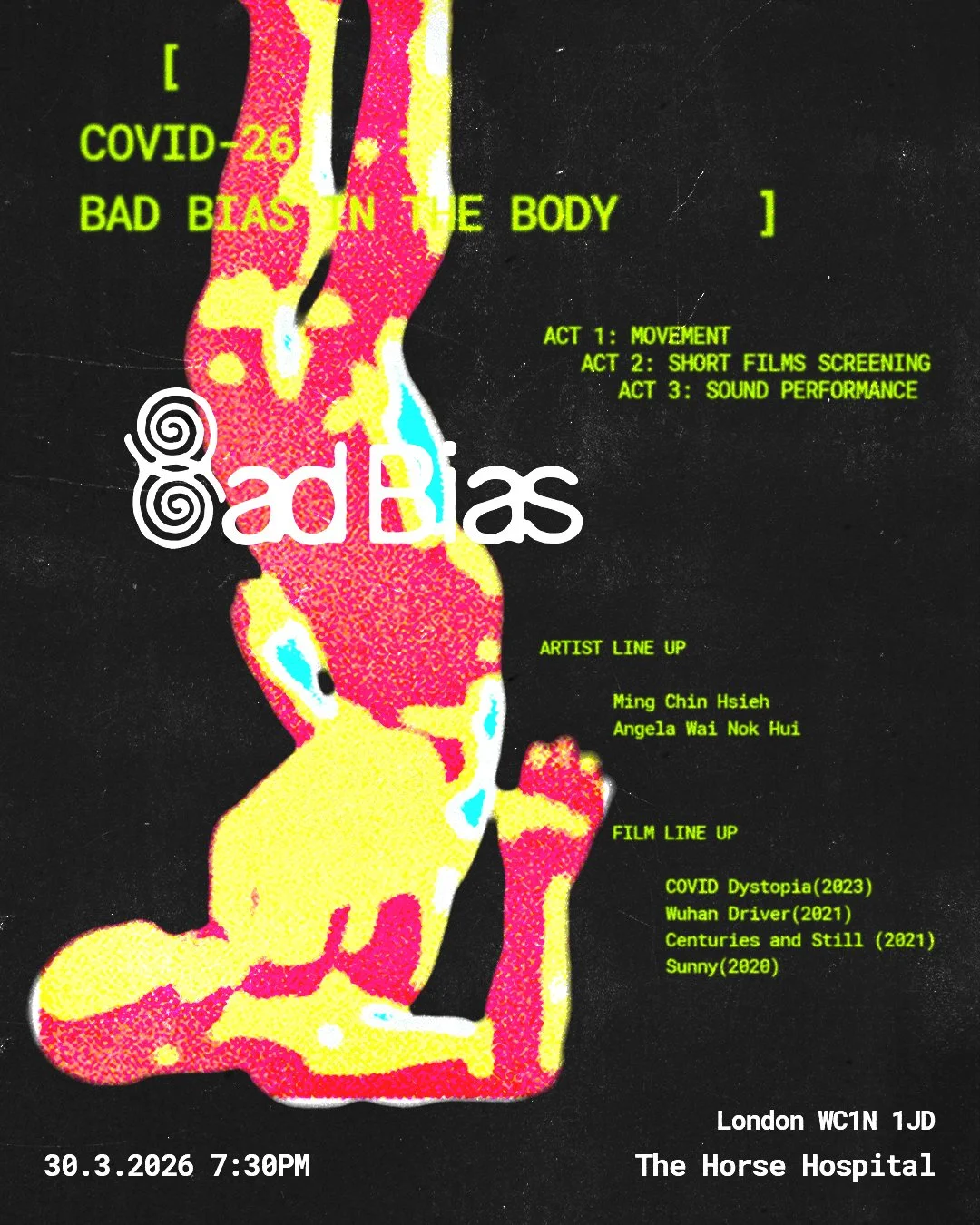
What remains in the body after COVID-era anti-Asian racism? A multidisciplinary event exploring how anti-Asian hate during COVID registered in the body and how it might be released together with live performances from Ming Chin Hsieh and Angela Wai Nok Hui
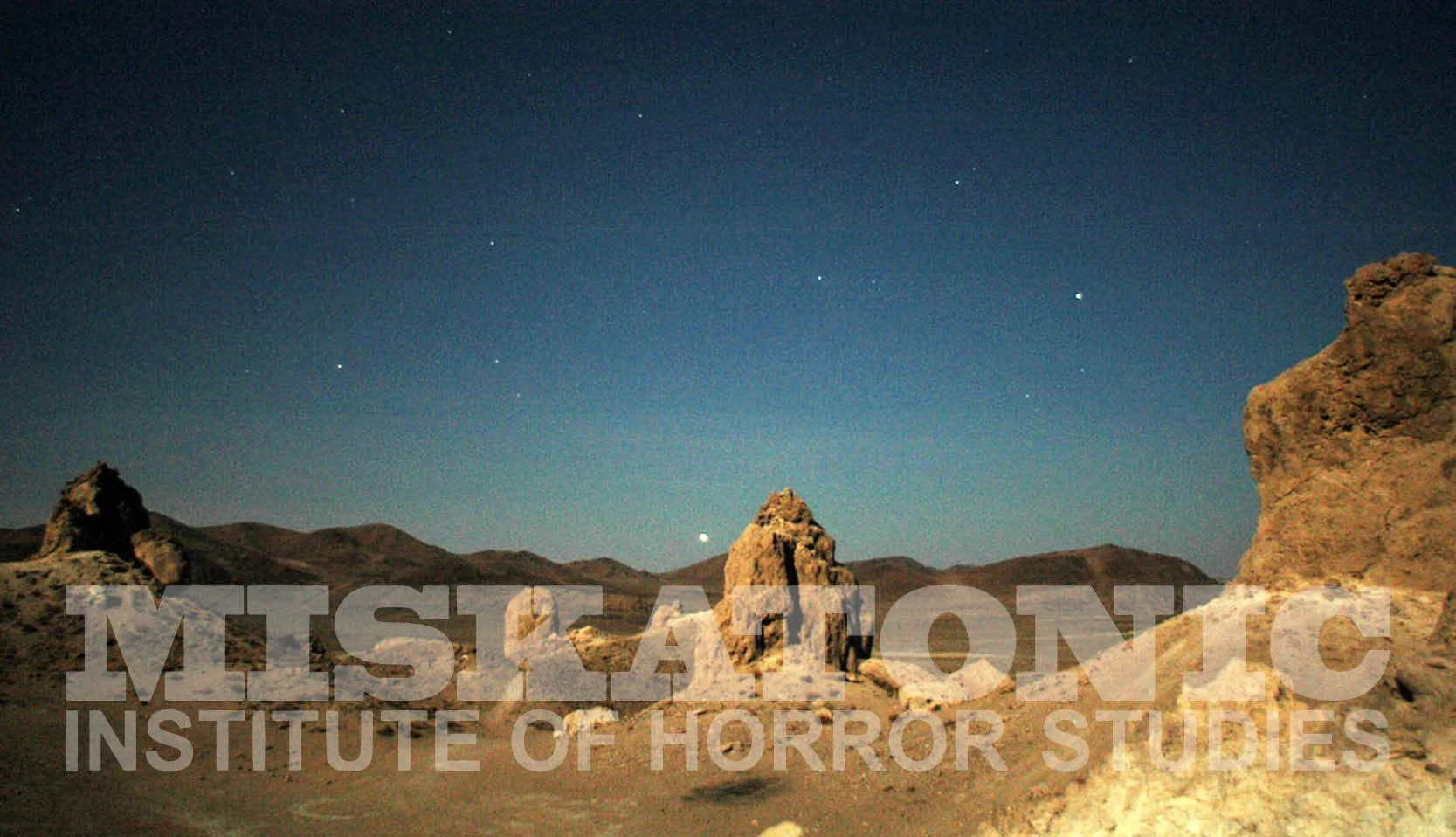
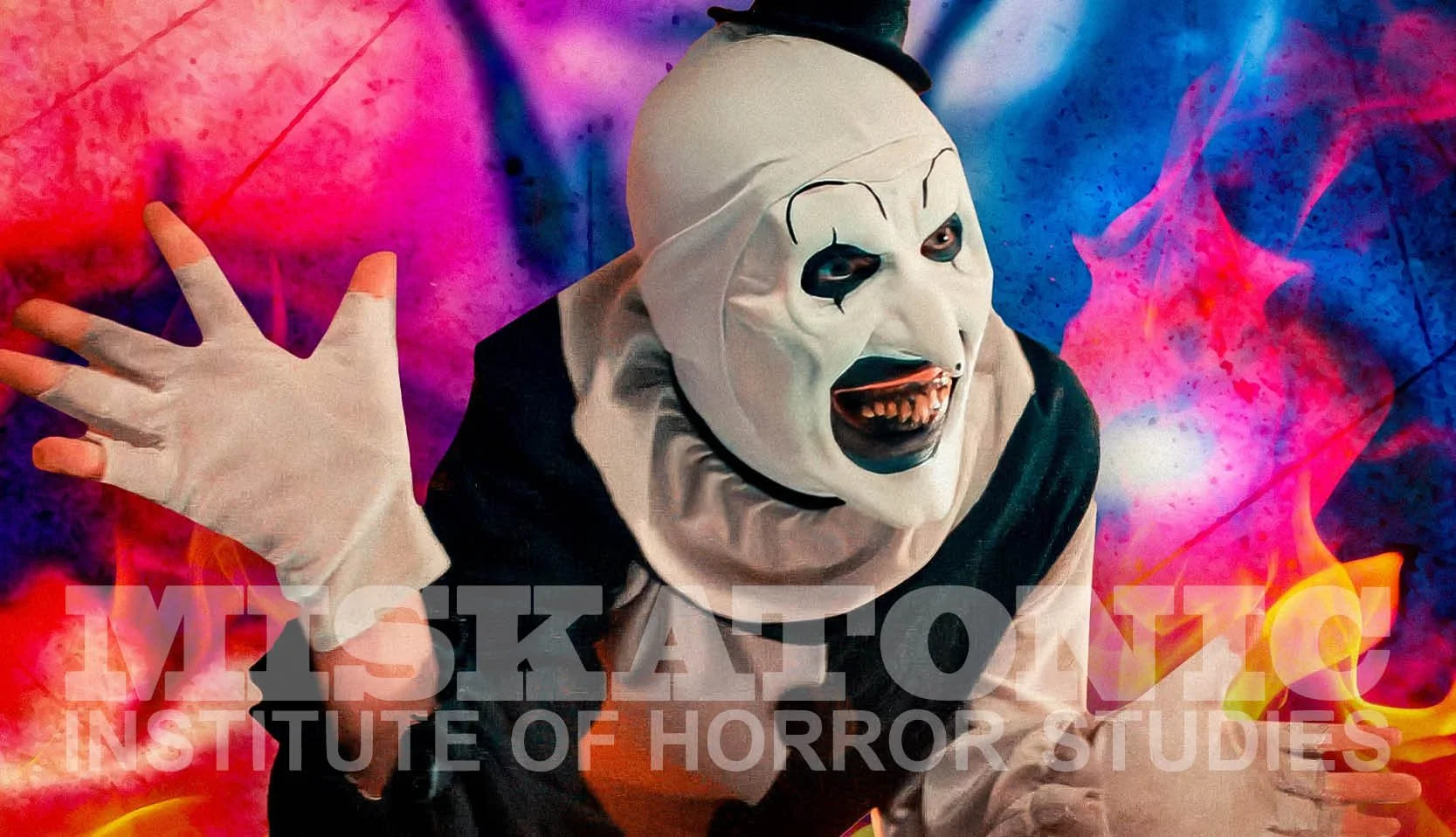
From Greed (1924) to post-apocalyptic cinema, the desert has served as one of horror’s most unforgiving landscapes. This lecture, presented by Ken Hollings for Miskatonic Institute of Horror Studies, traces how the American desert became a site of monsters, mutations, and moral collapse, shaped by atomic testing, exploitation cinema, and low-budget genre filmmaking.
This lecture, presented by Nedim Hassan for Miskatonic Institute of Horror Studies examines how metal fans and musicians were cast as “folk devils” within the 1980s culture wars, and how a cycle of horror films—including Trick or Treat and Black Roses—absorbed and refracted these anxieties.
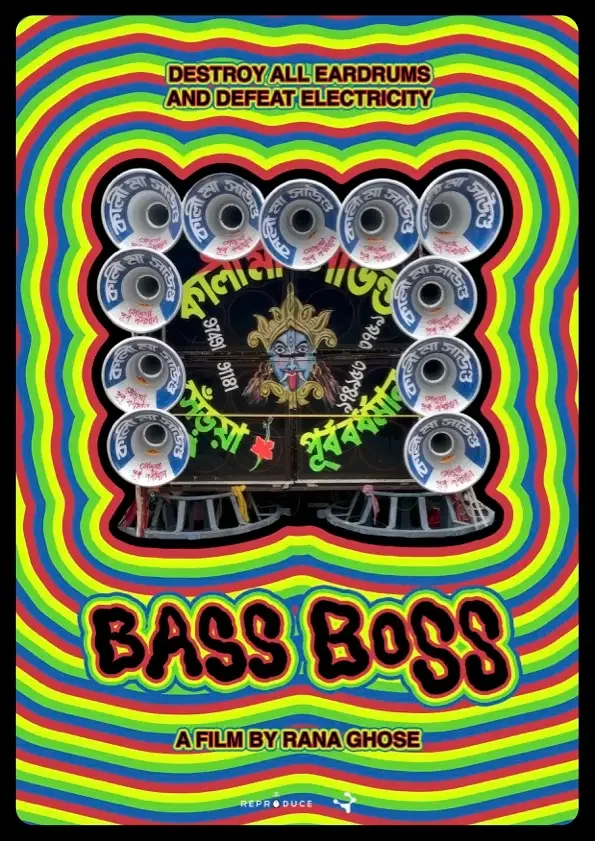
A screening of three films exploring the metaphysics of electromagnetic communication, psyops, and conspiracy. Craig Baldwin’s Tribulation 99: Alien Anomalies Under America (1992), Riar Rizaldi’s Tellurian Drama (2020), and Signal Warfare Research Unit’s T2S.
Amurmur is a platform celebrating memory, enshrinement and archives. For our first event, through readings and budding projects, a selection of artists share their impassioned ways of engaging with the past. Followed by a screening of a film by Ines Barquet and Ximena Prieto, based on an idea by Alexia Marmara.
Hack the planet! Celebrating it’s 30th, a screening of Hackers (1995), featuring costumes by Roger K. Burton on display. With an introduction by The Contemporary Wardrobe Collection.
A seasonal evening of barely-remembered formats and sonic seances featuring glimmers of the ghostly televisual past, psychogeographical spoken word, music and moving pictures.
Presented by Mikatonic, this talk explores how cinematic representations of the asylum and its patients have reflected real-life developments in psychiatry, including the demolition of Victorian institutions and moves toward community-based care in the late 20th century. We will also see how film itself played a role in these developments, with documentary exposés of asylum life like Frederick Wiseman's Titicut Follies (1967) revealing the real-life horrors of the institution.
The UK’s first and longest-running festival of Indigenous Cinema returns to the Horse Hospital with a dusk programme of short films by First Nations filmmakers Suni Sonqo Vizcarra Wood, Rodrigo Sena, Pranami Koch, Payam Shadnia, Arina Mado, and Awanui Simich-Pene.
The UK’s first and longest-running festival of Indigenous Cinema returns to the Horse Hospital with a matinee programme of short films by First Nations filmmakers Jess Lowe Chaverri, Konwanahktotha Alvera Sargent, Terry James Jones, KJ Edwards, January Marie Rogers, Sarah Houle, Theo Jean Cuthand Robert Joe, Abraham Cote, and Amanda Strong.
STRATA’s fifth edition welcomes a curated lineup of experimental electronics and audiovisual performance. With: Canaan Balsam, Onas Ueno, Partial Defrag, Vittoria Assembri & Paola Lesina.
Join us for a final night of screenings for Home Cinema, a curated season of films dedicated to the people, the artefacts and the memories that magic a space into a home.
A screening of Living Inside, Underscan and Window Work, a poetry reading by Bidhya Limbu, followed by The Lacey Rituals, as part of Home Cinema, a curated season of films dedicated to the people, the artefacts and the memories that magic a space into a home.
Welcome to the opening night of Home Cinema, a curated season of experimental films dedicated to the people, the artefacts and the memories that magic a space into a home.
Forage Friction is an immersive, experimental sound/cinema art installation, film, and performance project from Elvin Brandhi and Tengal. Luigi Monteanni presents T2S, Khabat Abas will screen Bombshell Cello and Ilana Blumberg will perform a live set, playing the sewing machine as a musical instrument.
Brontë Schiltz joins the Miskatonic Institute of Horror Studies to explore how the Televisual Gothic has imagined television as both a site of horror and a means of resistance—revealing the medium’s power to distort reality, exploit its subjects, and reinforce class hierarchies, but also to challenge and subvert them.
A series of films presented by Animal Nature Future Film Festival, screening The Inflammation of Nature (2025), Watchful (2025) & Never too Late (2025)
Antony Clayton joins the Miskatonic Institute of Horror Studies to explore a century of horror cinema rooted in the underworlds of fact and folklore, where everyday transit systems become uncanny landscapes of dread. We will trace how myth and rumour entwine with the anxieties of the modern city, shaping films that turn tunnels into sites of fear, claustrophobia, and monstrous intrusion.
becoming stases static stagnant marks the launch of the third issue of PHREAK – the strictly print alternative music, fashion and arts publication founded in 2021.
Visions in the life of Victorian vagrant poet Francis Thompson
Step into the hazy, destabilising world of Shoegaze Horror—a strain of cinema that trades story for sensation, jump scares for silence, and clarity for lingering dread. Presented by Andrew Pope
Genesis P-Orridge lived their art to the extreme. A pioneering musician, avant-garde artist, spiritual explorer and gender revolutionary, Genesis has been featured in films and videos, but never the full story… never this intimate... until now.
VSSL Studio present the London premiere of Keioui Keijaun Thomas’ film and multimedia performance, Come Hell or High Femmes: The Dolls Rise.