
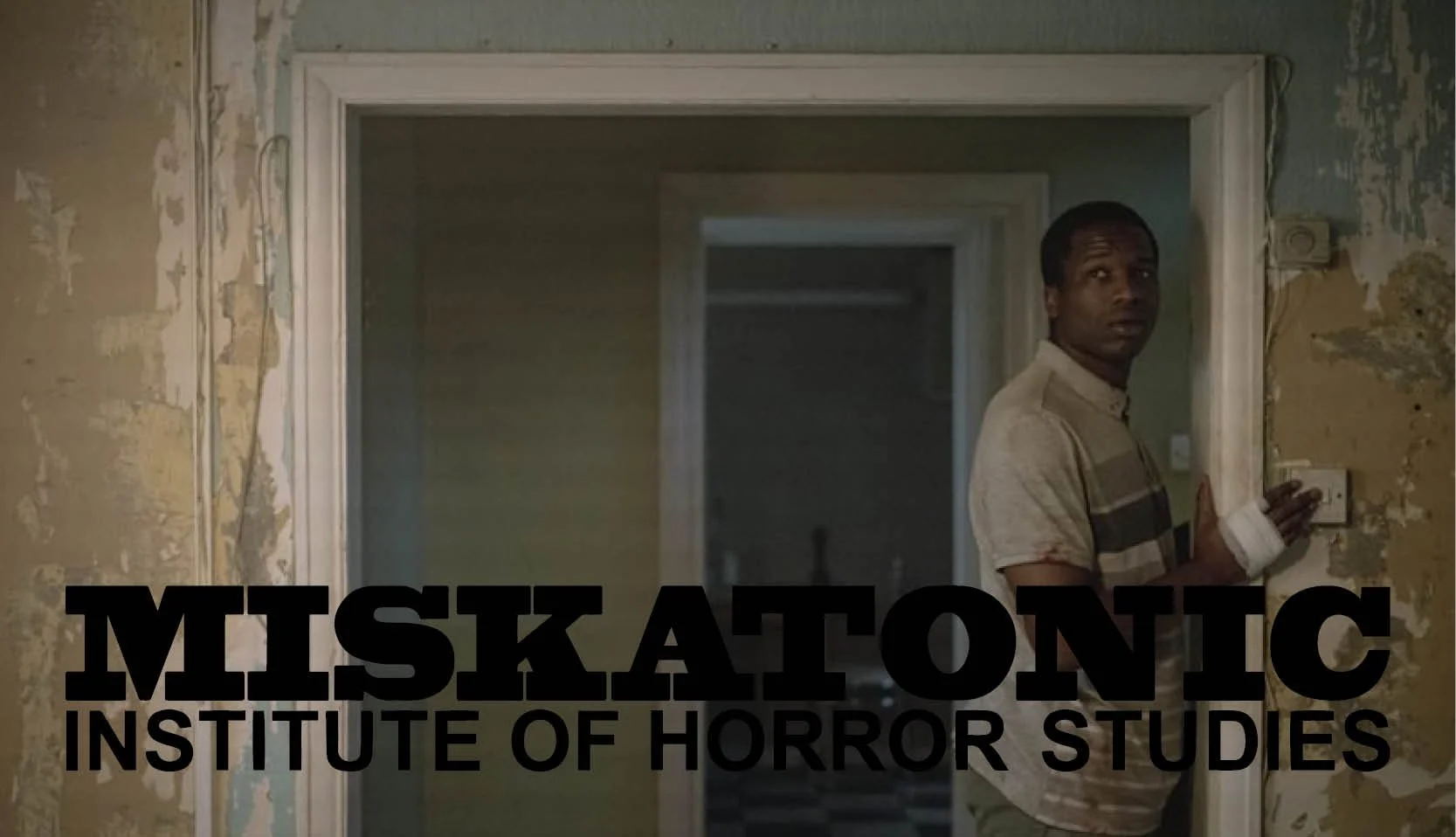
His House (2020) is a ghost story about displacement, precarity, and the inescapable afterlives of empire. This lecture situates the film within a global “horror cinema of precarity” that uses the genre to address marginalised experiences. Drawing on postcolonial Gothic and hauntological theory, it explores how Britain’s imperial and capitalist legacies haunt the film atmospherically rather than corporeally.
Doors: 7pm [event starts promptly at 7.15pm, please do not be late]
Tickets £9-12
His House (Weekes, 2020) is crowded with ghosts. Walls whisper, shadows move, and spectres stalk its refugee protagonists. Yet this lecture looks beyond the film’s overt apparitions to uncover the deeper, less visible hauntings embedded within its narrative: the lingering afterlives of colonialism, capitalism, and displacement. These are not ghosts that simply lurk in corridors, but forces that structure everyday existence.
The talk begins by situating His House within what is termed a “horror cinema of precarity”—an international cycle of films that mobilise horror aesthetics to confront the lived realities of marginalised and precarised communities. Films such as Under the Shadow, Tigers Are Not Afraid, La Llorona, and Raging Grace fuse the supernatural with sociopolitical critique, using fear to articulate the violence of exclusion. In His House, this framework foregrounds the experience of refugees and asylum seekers navigating enforced displacement within a hostile United Kingdom.
Building on readings of the film’s British setting as an “anti-location,” the lecture adopts a postcolonial Gothic perspective informed by hauntological theory. It argues that Britain’s imperial past—particularly its exploitation of Black bodies in the production and circulation of mass consumer goods—returns as a diffuse but oppressive presence. These colonial capitalist hauntings are not embodied in a single monster, but operate atmospherically, saturating the film’s spaces through systems of surveillance, labour, and consumption.
This mise-en-ambiance of dread reflects the real-world slow violence enacted upon forced migrants in the UK: a condition in which acceptance is perpetually deferred, and the possibility of being one of the “good ones” remains out of reach. In His House, horror emerges not only from what is seen, but from what endlessly persists.
Presented by James Rendell