
Often dismissed as gratuitous or artistically empty, gore remains one of horror cinema’s most contested pleasures. This lecture reframes gore as an aesthetic practice rooted in tactility, craft, and collaboration. Tracing the devaluation of gore films and their fandoms, it situates graphic violence within broader artistic traditions and examines practical effects as a form of resistance to digital smoothness.
Doors: 7pm [event starts promptly at 7.15pm, please do not be late]
Tickets £9-12
Gore has long been one of horror cinema’s most contested pleasures. Frequently dismissed as gratuitous spectacle, defended as the essence of “real” horror, and routinely denied artistic legitimacy, gore occupies an uneasy position within film culture. This lecture approaches gore not as excess, but as an aesthetic practice and a mode of artistic expression—one rooted in tactility, craft, and meaning. It traces the intersections between practical makeup effects, fan communities, and critical discourses to argue for gore’s cultural and artistic value.
The lecture opens by examining how gore films and their audiences have been historically devalued within academic writing and popular commentary, before situating cinematic gore within longer traditions of “high art” preoccupied with the body, violence, and the grotesque. Far from disrupting narrative, gore sequences will be positioned as integral to storytelling, where practical effects function as moments of heightened attention rather than distraction. In an era increasingly defined by digital smoothness and visual ephemerality, the visible labour, imperfection, and ingenuity of practical effects emerge as a form of aesthetic resistance.
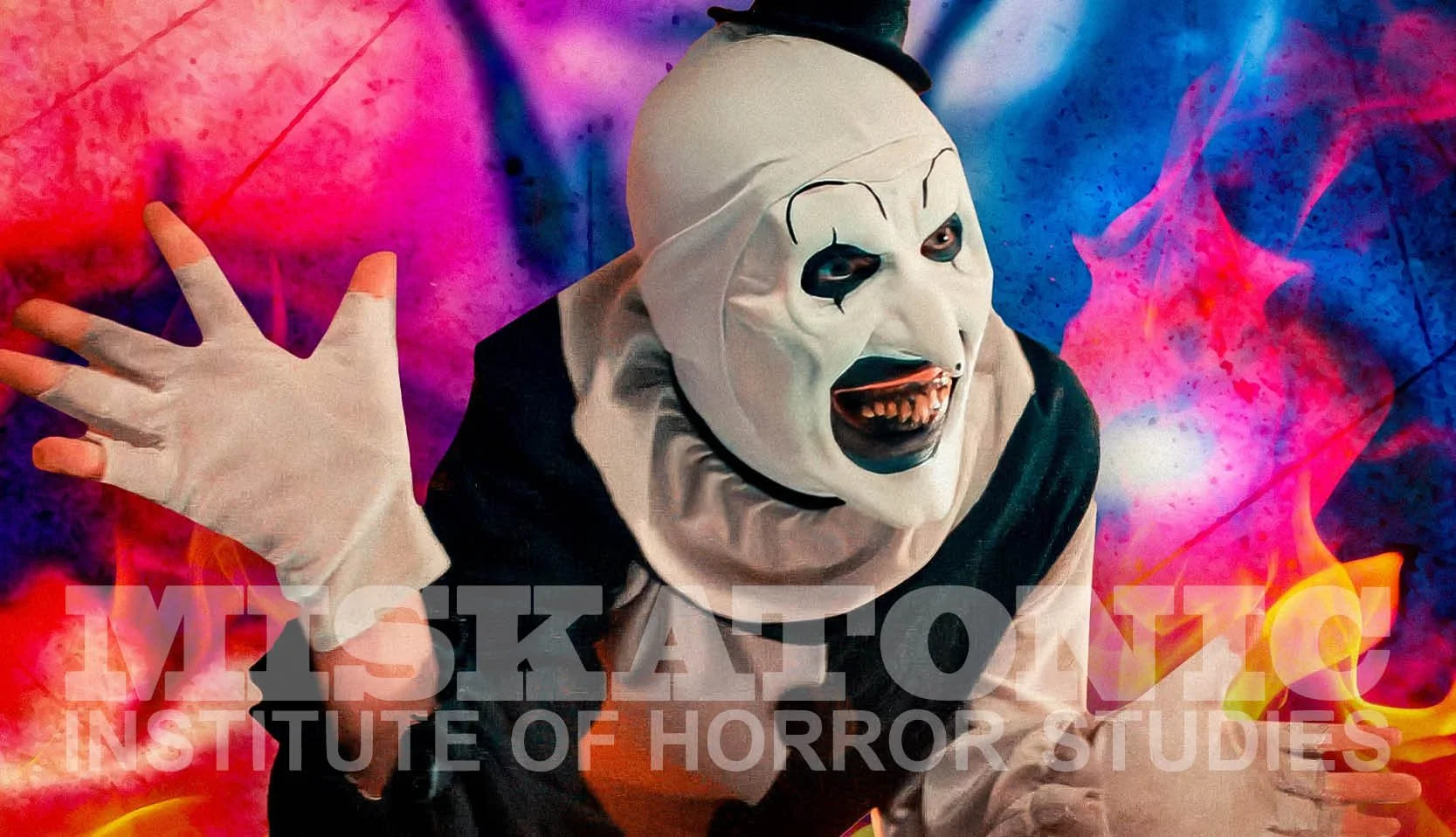
The second half of the lecture turns to Damien Leone’s Terrifier series as a contemporary case study, exploring the dynamic relationship between creator, audience, and horror history. Through close attention to the films’ notorious death scenes and their cultural reception, on-screen mutilation is reframed as an invitation to look closer rather than look away—to engage with texture, process, and craft as sources of power. Drawing comparisons with films such as Headless (2015) and The Void (2016), the lecture demonstrates how practical effects continue to carry subcultural capital in the age of CGI.
Ultimately, this talk argues that gore’s persistence reflects a shared reverence for the messy, the material, and the handmade; reasserting horror’s outsider status and its enduring artistic potential.
Presented by Shellie McMurdo